


Oder Talks for the Oderberg Springs Festival
Oderberg, June 14 & 15 2025
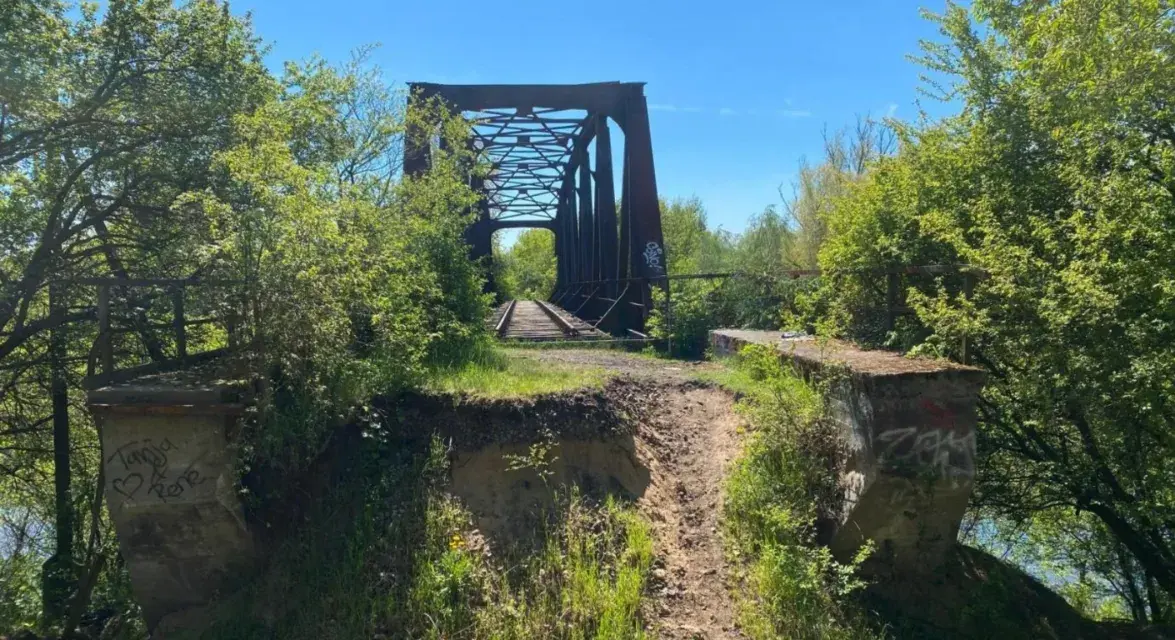 The railroad bridge over the Oder at the spring swamp area near Oderberg
Oderberg has a love-hate relationship with water: until the 17th century, the river made the town a flourishing trading metropolis, also often plagued by flooding. The “cutting off” from the river by draining the Oderbruch was then a similar economic and social shock to the recent collapse of the shipyard in 2015. Currently, the fabric of the old town is threatened by unchannelled spring water. In GDR times, these very springs were the water used to make coffee - it tasted better than tap water. Today, the city's cultural life sometimes seems divided between those who live high up on the hill and those who live close to the water.
The two ODER TALKS as part of the “Festival of Oderberg Springs” are curated by choreographer and KuNaKu director Liz Erber and cultural scientist and director Heiko Michels. With a long-term cultural-historical perspective and artistic thinking practices, they bring contradictory scientific, political and social perspectives and their protagonists into conversation.
The ODER TALKS were initiated in 2023 by the German-Polish Liederlauschen festival at the Theater am Rand (Zollbrücke an der Oder), with actors such as Thomasz Kurianowicz (editor-in-chief of Berliner Zeitung), Katarzyna Jackowska (Philharmonie Stettin), members of the Save oder Die initiative and many others, moderated by Heiko Michels (Limited blindness). The series will continue in June for the Oderberg Springs Festival, organized by KuNaKu, and in July for the next Liederlauschen Festival.
Saturday, June 14 | 4:30 p.m. | Oderberg Binnenschifffahrtsmuseum
(in the run-up to the multidisciplinary station performance “Sources of Life”, staged as a city tour with interventions at the individual sources)
wet OR dry?
Hydrological future scenarios and fear fantasies for the Oderberg region
with Susanne Altvater (environmental lawyer at the Federal Ministry for the Environment), Norman Ebert (Eberswalde University for Sustainable Development), Martina Hähnel (Mayor of Oderberg). Martin Krüger (forester and head of the Brandenburg Forestry Union), Johanna Häger (landscape architecture and permaculture design). Moderation: Heiko Michels.
Climate researchers describe the ongoing process of the drying out of north-east Brandenburg, associated with species extinction, forest fires, the disappearance of
biodiversity and the socio-economic basis of life. At the same time, plans for rewetting are being attacked by citizens, among other things with the socio-economic economic argument of further deindustrialization of the region. People do not want to be swamped, declared a reserve, by a perceived abstract EU policy. “We are not frogs!”. Hydrologists were shouted down at events. Elon Musk pours populist water on the mill when he laughingly exclaims in Brandenburg, one of the driest regions in Germany: “There's water everywhere. It rains a lot. Does this look like a desert?”
The talk will begin by asking the invited participants from different perspectives about their visions of the future: what does the water situation look like in Oderberg 2050? We juxtapose ideas: utopias, dystopias, strategies - in order to then creatively reflect and outline together with the audience what value and what role and what form water could have in an Oderberg scenario of the future.
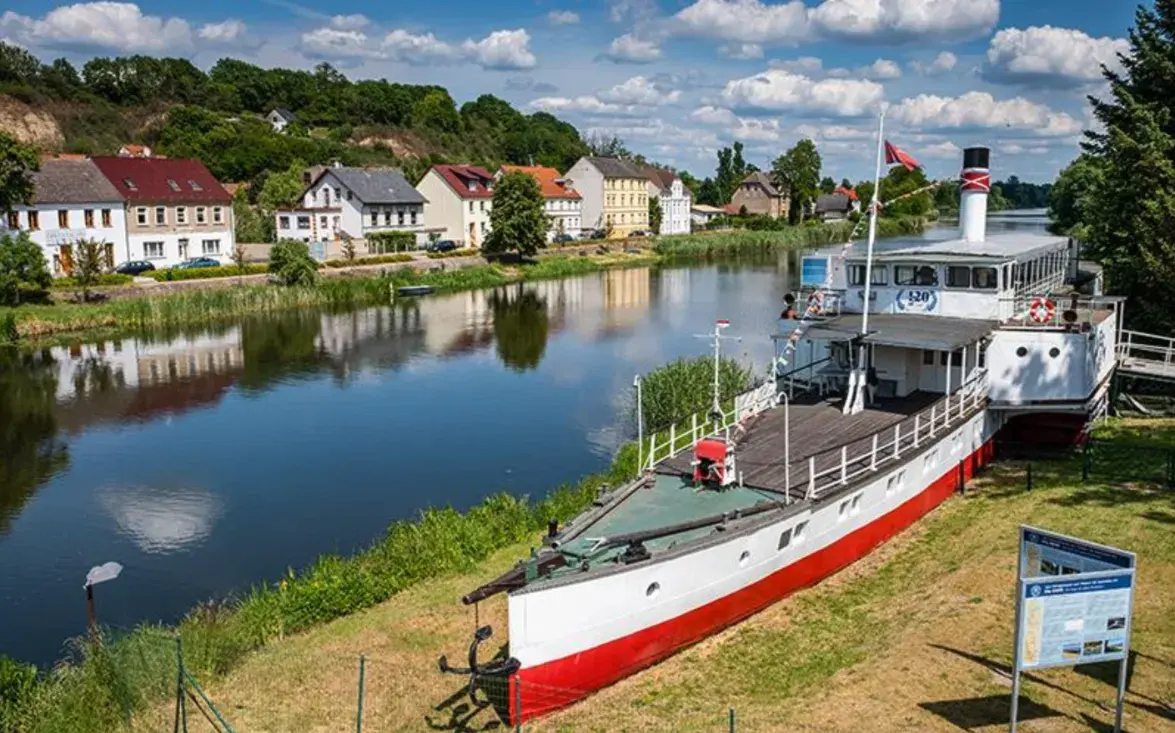
View of one of Oderberg's slopes, which are dotted with springs, from the Talk location at the Inland Navigation Museum
Sunday, June 15 | 4:30 p.m. | KuNaKu outdoor meadow
(following the multidisciplinary station performance “Sources of Life”, staged as a city tour with interventions at the individual sources)
Art OR action?
How does knowledge become fluid?
At the “Global Water Dances” on June 14, people in over 200 locations on six continents will dance - in the name of our waters and for clean drinking water for all living creatures. Among others: New York, Mombasa, Tokyo and Oderberg!
But can artistic actions initiate change at all, and with which contemporary strategies? Are they just a thematic pointer? Do they provide a framework for exchanging information? Can they directly combine knowledge with emotion and thus reach people more deeply? Can they create awareness, transforming dry knowledge into an effervescent experience? Can the feeling of immersion in art teach us a new feeling of immersion in the environment? And why have artists in rural regions of Brandenburg who pursue transdisciplinary strategies been increasingly met with hatred and resistance in recent years?
At the talk, artists will meet institutionally and freely organized actors who are trying to bring the pressing issue of water to the attention of the public. Following the performance of “Sources of Life”, we will talk about strategies and practices to recouple art, research and knowledge transfer.
Contact
Heiko Michels – freelancer KuNaKu
+49 179 9729544
